Pages

What makes her Pretty ??


Its the goodness in her heart that makes a Girl pretty


Its her inner strength that makes a Girl admirable

Its the Sacrifice she makes that makes a Girl unique


Its her compromise with Everything that makes her precious


She is beautiful not based on her looks
But
What makes her beautiful is her inner beauty


She is Flower of every Mom's Garden, Yes She is the Girl who makes the World Pretty


For All the girls in the World !

Your love has made me dance like mad....

Lets immersed in the sea of purity...Sufism is the best way to forget your worries and to go on in search of The Eternal Truth... I want you to feel the beauty of Sufism .....This is beautiful... Lets have a look


Tere Ishq nachaiyaan kar key thaiyaa thaiyaa
Your love has made me dance like mad

Tere Ishq ne dera mere andar keeta
Bhar ke zeher payala main taan aape peeta,
Jhabde wahudi tabiba nahin te main mar gaiyaan
Tere Ishq nachaiyaan kar key thaiyaa thaiyaa
Falling in love with you
Was like taking a sip of poison
Come my healer, forsaken, I am sad.
Your love has made me dance like mad

Chupp giyah ve suraj bahar reh gayi laali
Ve main sadqey hova, D
evein murrjey wikhali
Peera main bhul gaiyaan tere naal na gaiyaan
Tere Ishq nachaiyaan kar key thaiyaa thaiyaa
The sun has set, its flush only is left
I’ll give my life for a glimpse of you
My fault I came not when when you bade
Your love has made me dance like mad.

Ais Ishq de kolon mainu hatak na maaye
Laahu jaandre berrey kehrramorlaya
Meri aqal jun bhulli naal mhaniyaan dey gaiyaan
Tere Ishq nachaiyaan kar key thaiyaa thaiyaa
Dissuade me not from the path of love
Who can hold the boats on the move?
Stupid, I joined the boatman’s squad
Your love has made me dance like mad

Ais Ishq Di Jhangi Wich Mor Bulenda
Sanu Qibla Ton Qaaba Sohna Yaar Disenda
Saanu Ghayal Karke Pher K
habar Na Laaiyaan
Tere Ishq nachaiyaan kar key thaiyaa thaiyaa
A peacock calls in the grove of passion
It’s Qibla, It’s Kaaba where lives my love
You asked not once after you stabbed
Your love has made me dance like mad

Bullah Shah na ao
unda mainu Inayat de buhe
Jisne mainu awaye chole saave te suhe
Jaan main maari aye addi mil paya hai vahaiya
Tere Ishq nachaiyaan kar key thaiyaa thaiyaa
Bulleh Shah Sits at Inayat’s door
Who has dressed me in green and red
And caught me the instant I flew from the pad
Your love has made me dance like mad
----------------------------------

What is Game Theory in Economics?

Besides Cricket, poetry, tweeting, Friends and Fun there is another thing which is very important and that is to study the course books :P but as the Cricket season has surrounds us all i thought why not study some thing that matches the interest so i chose "The Game Theory" Lets start with the definition!


Definition 1:


"Game theory is the science of strategy. It attempts to determine mathematically and logically the actions that “players” should take to secure the best outcomes for themselves in a wide array of “games.” The games it studies range from chess to child rearing and from tennis to takeovers. But the games all share the common feature of interdependence. That is, the outcome for each participant depends on the choices (strategies) of all. In so-called zero-sum games the interests of the players conflict totally, so that one person’s gain always is another’s loss. More typical are games with the potential for either mutual gain (positive sum) or mutual harm (negative sum), as well as some conflict."Definition 2:Set of concepts aimed at decision making in situations ofcompetition and conflict (as well as of cooperation andinterdependence) under specified rules. Game theoryemploys games of strategy (such as chess) but not of chance (such as rolling a dice).Definition 3:
Game theory attempts to look at the relationships between participants in a particular model and predict their optimal decisions.Definition 4:

A mathematical method of analysis used in operational research to predict the outcomes of games of strategy and conflicts of interest. It is used to assess the likely strategies that people will adopt in situations governed by a particular set of rules and to identify the best approach to a particular problem or conflict. Explanation:
  1. Game theory was pioneered by Princeton mathematician john von neumann.
  2. In the early years the emphasis was on games of pure conflict (zero-sum games).
  3. Other games were considered in a cooperative form.
  4. That is, the participants were supposed to choose and implement their actions jointly. Recent research has focused on games that are neither zero sum nor purely cooperative.
  5. In these games the players choose their actions separately, but their links to others involve elements of both competition and cooperation.
  6. The essence of a game is the interdependence of player strategies.
  7. There are two distinct types of strategic interdependence: sequential and simultaneous.
  8. In the former the players move in sequence, each aware of the others’ previous actions.
  9. In the latter the players act at the same time, each ignorant of the others’ actions.
Examle :
Strategic moves. A player can use threats and promises to alter other players’ expectations of his future actions, and thereby induce them to take actions favorable to him or deter them from making moves that harm him. To succeed, the threats and promises must be credible. This is problematic because when the time comes, it is generally costly to carry out a threat or make good on a promise. Game theory studies several ways to enhance credibility. The general principle is that it can be in a player’s interest to reduce his own freedom of future action. By so doing, he removes his own temptation to renege on a promise or to forgive others’ transgressions.

If you have any query about Game theory or If you have some good definition to share must tell me :-) and You can also read Game Theory at http://en.wikipedia.org/wiki/Game_Theory
Take Care


Why should I be weary
when every cell of my body is bursting with life?
Why should I be a donkey's slave
when I ride upon a magical horse?
Why should I be less than the Moon
when there are no scorpions at my feet?
Why should I stay at the bottom of a well
when a strong rope is in my hand?
~Rumi

Let us study about Perfect competition Today


PERFECT COMPETITION

- a very large number of small producers or sellers,
- a standardized, homogeneous product,
- the inability of individual sellers to influence price,
- the free entry and exit of sellers in the market, and
- unnecessary nonprice actions."

Examples of markets in perfect competition are extremely rare. Numerous markets in the retail, service and agricultural sectors approach perfect competition best. But, in the agricultural sector, government support price programs distort the market mechanism. Not withstanding the lack of good examples, this form of market is important because of its

PERFECT COMPETITION NUMBER OF FIRMS
The very large number of firms in perfect competition implies that each individual firm is very small in comparison to the total market. Indeed, if one firm were to become significantly large, it would dominate the market and competition would be eliminated or at least diminished.

In the milk production segment of agriculture, farms are usuallysmall. They are especially small compared to the size of the entire market for milk. Note that the milk distributors are occasionally large, but not the productive farms.

PERFECT COMPETITION STANDARDIZED PRODUCT
The product in perfect competition is said to be standardized (or homogeneous). This means that it does not make any difference to customers which specific firm sells the product:
it is absolutely identical. This is the main distinction between perfect competition and monopolistic competition: once some differences can be recognized by customers, firms acquire
power over these customers.

Milk is a uniform and homogen eous product. It is not possible to make a distinction between the milk of one farm and another. The government has indeed set standards of quality, fat content and cleanliness.

PRICE TAKER
The firms in perfect competition have no power over price: they have to sell at the going market price. The firms in perfect competition are said to be price takers. Should a firm attempt to raise the price by the smallest possible amount, customers would not buy from it because they could buy the same product from other firms. Lowering the price is also not necessary because the firm can already sell all its output at the going price.

A milk producer who would try to raise his/her revenues by increasing the price for milk, would find the company collecting the milk in that region unwilling to buy his/her milk any longer. One individual farmer is thus unable to affect the price of milk in the entire market.

PERFECT
COMPETITION ENTRY AND EXIT
There are no barriers to entry to or exit from a market in perfect competition. This condition assures that no firm will dominate the market and evict other firms. It also assures that the number of firms (although changing) will remain large.

Agricultural production can start for most crops by simply planting on a parcel of land. For instance, that is true for fruit trees and vegetables. (It is true. however, that for some products such as milk or tobacco, the government limits production because of the existing overproduction).

PERFECT COMPETITION NONPRICE ACTION
Nonprice actions such as advertising, service after sale or warranty, are not necessary in perfect competition because the firm can already sell all its output at the going price, and incurring additional expense would only make it unprofitable. Nonprice action for the entire industry may however be useful

A single milk producer cannot possibly influence the consumption of milk at large, and needs not advertise. An association of milkproducers or a large milk distributor may, however, be in aposition to use advertisement effectively.

PERFECT COMPETITION DEMAND
The demand of firms in perfect competition is perfectly elastic (i.e., the smallest possible price change results in a virtually infinite quantity change). Such demand is represented graphically by a horizontal demand curve: no matter what quantity is sold, the price is the same, and it is the going price in the market.

Graph

Nationwide, the demand for milk is likely to be downsloping, that is inversely related to price. But for a single milk producer, it is given by the price the farmer can receive: the going market price. It does not change, no matter what quantity the farmer produces. Thus demand is horizontal.

PERFECT COMPETITION MARGINAL REVENUE
The horizontal demand curve is also the marginal revenue of a firm in perfect competition. The marginal revenue, or additional revenue from one more unit sold, is just equal to the going price (which is shown graphically by the demand curve itself). Note that the average revenue is also the demand curve and total revenue is an upsloping straight line.

PROFIT MAXIMIZATION

A firm must seek to sell a volume of output where its total revenue exceeds its total cost by the largest amount possible; that is, its profit is the maximum.

LOSS MINIMIZATION
If a firm fails to derive a profit, it may nevertheless seek, in the short run, to produce at that level of sales where the difference between its cost and its revenue, i.e., its loss, is minimum.

CLOSE DOWN DECISION
If a firm has revenues that are insufficient to cover even its fixed costs in the short run, the firm must close down.

BREAK-EVEN POINT
The volume of output where total revenue is equal to total cost is known as the break-even point. A firm must be beyond its break-even point in order to be maximizing its profit.

MARGINAL REVENUE MARGINAL COST RULE
Producing at the level of output where marginal revenue equals marginal cost is equivalent to profit maximization. Indeed, if one less unit were to be produced, profit would be smaller by the excess of marginal revenue over marginal cost for that last unit. If one more unit were to be produced, profit would also be smaller, this time by the excess of marginal cost over marginal revenue.

MARGINAL REVENUE MARGINAL COST
The marginal revenue = marginal cost rule is applicable to loss minimization as well as profit maximization. However, if marginal revenue intersects marginal cost below average variable cost, it means that revenues are not sufficient to cover fixed costs and the firm should close down.

MAXIMUM PROFIT
The maximum profit is obtained by first determining the level of output for which marginal revenue equals marginal cost (thus profits cannot possibly be increased). Then determining 1- total revenue given by price multiplied by quantity, 2- total cost given by average total cost multiplied by quantity, 3- the difference between 1 and 2 above is the profit (or loss).

MAXIMUM PROFIT GRAPH
Since maximum profit is the excess of total revenue over total cost, it is shown graphically as the area by which the total revenue rectangle exceeds the total cost rectangle. The height of total revenue rectangle is the price received by the firm, and the width is the optimum quantity (where MR=MC). The height of total cost rectangle is average total cost (on ATC curve), and the width is the optimum quantity.

Graph

SHORT RUN SUPPLY CURVE
The short run supply curve of firms in perfect competition is the upsloping portion of the marginal cost curve (above the average variable cost intersection). Indeed, a firm determines its optimum volume of sales by taking the intersection of marginal revenue and marginal cost. The marginal revenue is also the price it receives. Thus supplier's price-quantity combinations are given by the marginal cost upsloping portion.

LONG RUN PERFECT COMPETITION EQUILIBRIUM
The long run equilibrium for firms in perfect competition is where demand (and marginal revenue which is identical to it) is tangent to the minimum of average total cost (where marginal cost also intersects average total cost). At that point, there is no profit or loss for the firm. (Note that there is no pure or economic profit, but normal profit must still be covered).

ENTRY OF FIRMS IN PERFECT COMPETITION
Should demand be above the minimum of average total cost, pure profit would exist for firms in perfect competition. This profit would attract new firms to the industry. Such entry of new firms is not impeded by any entry barriers in industries in perfect competition. The new firms would increase the total market supply and drive the price down. The lower price pushes the demand for each firm down toward or even below the equilibrium minimum average total cost point.

EXIT OF FIRMS IN PERFECT COMPETITION
Should the demand be below the minimum of average total cost, losses of firms would force some firms to leave the industry. As firms leave, a decreasing total supply pushes price back up. The increasing price lifts the demand curves for individual firms upward toward or even above the equilibrium point. Firms departure or entry will continue until the price settles to be just equal to minimum average cost.

LONG RUN SUPPLY CURVE
The long run supply curve for an industry in perfect competition is perfectly elastic (that is horizontal) in constant-cost industries and upsloping in increasing-cost industries. Whether an industry is constant-cost or increasing-cost is determined by
the presence of adequate or insufficient resources.

PERFECT COMPETITION ECONOMIC EFFECT
Perfect competition is seen as an ideal or optimum form of market because of its very beneficial economic effect for society, which comes from
- allocative efficiency, and- productive efficiency.
But there are a few shortcomings nevertheless.

PRODUCTIVE EFFICIENCY
The productive efficiency of perfect competition can be observed in the long run equilibrium point of all firms in the industry, which is at the minimum of average total cost. This means that
all firms are forced to cut their costs and utilize the best available technology in order to have their minimum average total cost no higher than that of all the other firms in the industry. There is also no under or over utilized capacity.

ALLOCATIVE EFFICIENCY
The allocative efficiency in perfect competition comes from the fact that the quantity produced by each firm is just that for which the price paid by society is equal to the cost of additional resources (marginal cost). More could not possibly be obtained for a lower price. The resources are also the most efficiently allocated among industries since firms will bid for these resources up to the price consumers want to pay for them.

PERFECT COMPETITION SHORTCOMINGS
In spite of its beneficial economic effect, perfect competition fails to
- provide any correction for income distribution inequity,
- generate any public goods since there is not profit,
- stimulate technological progress because of lack of profits,
- offer diversity in products since these are standardized.

*L*o*v*e*


|C|I|N|D|E|R|E|L|L|A| walked on broken glass

Sleeping Beauty let a whole 'lifetime' pass

Belle fell in .l.o.v.e. with a
:hideous beast:

(Pocahontas) risked her life for a feast

Jasmine could have had *anyone*, but instead chose a
{p o o r m a n}

And Ariel [walked.on.land]

All for love and all for life

.B.l.o.o.d. .S.w.e.a.t. .n. .T.e.a.r.s.

*L*o*v*e* is about facing your |Biggest Fears|


My Dream {Episode 1}

Lets start the conversation after a long time with my First dream….

Birds were flying in the sky so high… A little bird sitting with her mother in her nest …

Mother teaching her about how to have a good flight.. but the little girl has some thing else to listen…

Mother looked at her and then looked to the angle of her eyes… Oh my …

My baby bird looking at the other nest…Listening to the gossiping birds…

Oh Lord…My baby bird…How to save her from the World…Oh Lord My baby bird…............... (cont...)

ALLAH


I know you are there
Little bird,
Covered by rich green, talking to the tree
Yes, a talking tree!

I know you are hiding
Little ant,
Under the solid brown, listening to the song
Yes, the singing earth!

I know you are relaxing
Tiny drop of rain,
Inside the airy white, hearing the laugh
Yes, a laughing cloud!

I know you are dancing
Little bee,
Beside fresh colors, joining a prayer
Yes, a praying flower!

I know you are breathing
Little fish,
Deep in the wide blue, amazed by stories
Yes, the Historian Ocean!

I am sitting in my room
Seeing you all in the heart of my eye
Praising the work of God
Wishing to add more before I die

Talking tree
Singing earth
Laughing cloud
Praying flower; and
Historian Ocean
Let me join you, and be sublime
Praising God till the end of our time!
http://www.islamicpoetry.org/s1-1:1.htm

AMEER KHUSRO COUPLET


U original
Khusrau darya prem ka, ulti wa ki dhaar,

Jo utra so doob gaya, jo dooba so paar.

English Translation.

Oh Khusrau, the river of love
Runs in strange directions.
One who jumps into it drowns,
And one who drowns, gets across.

"Love letter from a mathematician"


"My Dear Love"

Yesterday, I was passing by your rectangular house in trigonometric lane. There i saw you with your cute circular face, conical nose, parabolic chin and spherical eyes, standing in your triangular garden. Before seeing you my heart was a null set but when a vector of magnitude love fall on it, it has no free space on its 3D plane, please add ne in your heart and subtract all the angriness and divide your happy moments to multiply my Life hours because you + me = happiness forever. I miss you 24 hours a day 7 days a week.

Only Yous.......... ANTIDERIVATIVE.

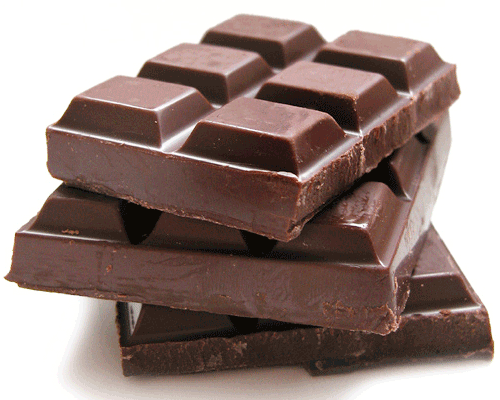
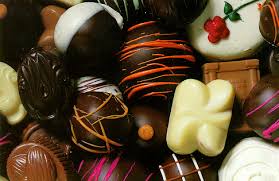
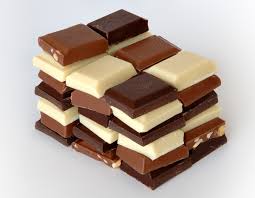
What is the History of Chocolate?


Chocolate was an important drink of the Aztec Indians, how it became popularized in Europe despite it being kept a state secret in Spain for nearly a century.
Although cocoa trees grew wild in Central America since pre-historic times, it wasn’t until around 600 AD when the Maya Indians established cocoa plantations in the Yucatan region of Mexico. The Mayans, and later the Aztecs, took the cocoa bean from the cocoa trees and processed it into a drink called “xocoatl” or “chocoatl.” This word, in the Mexican Indian language, means “foam water.” “Choco” means “foam” and “atl” means “water.” This chocolate was consumed only in the liquid form.

Chocolate was extremely important in the life of the Aztec Indians. According to Arthur W. Knapp, author of “The Cocoa And Chocolate Industry,” the Aztecs believed that chocolate was consumed by the Gods in paradise and that the cocoa seed was brought to earth as a special blessing for the people here by the God of the Air.


The last Aztec emperor, Montezuma, was reported to have drunk no other beverage than chocoatl, which consisted of chocolate flavored with vanilla and spices in such a way as to have the consistency of honey. This was noted by Hernando Cortez, he conqueror of Mexico, who in 1528 brought cocoa beans back to Spain to the court of the King Charles V.
chocolate baby

For the next century, chocolate became a top secret in Spain. Only monks in monasteries were allowed to process cocoa beans into chocolate because Spain wanted to keep the secret of processing chocolate from becoming known in the other European countries. This remained a secret in Spain for almost a hundred years. Finally, with the decline of Spain’s power, the secret leaked out. In 1606, an Italian traveler in Spain, Antonio Carletti, discovered the secret of chocolate and brought it to the other European nations.

In addition to Carletti’s discovery, chocolate was popularized even further by the marriage of Spanish Princess Maria Theresa and King Louis XIV in 1616. Maria Theresa gave chocolate to the French king as a wedding present, which helped popularize chocolate in France.

chocolate keyboard

Because of its great expense, chocolate was considered to be a drink of only the elite class for the rest of the 17th century. As the Spanish historian Oviedo noted: "None but the rich and noble could afford to drink chocolatl as it was literally drinking money. Cocoa passed currency as money among all nations.”

By early in the 18th century, the price of chocolate had dropped so many people outside of the wealthy class could enjoy it. During this era, chocolate houses became as popular in England as coffee houses. In fact, there were chocolate houses that catered to only certain types of clientele such as politicians, gamblers, and the literati.

One interesting fact about chocolate in England was that the Quakers participated in this business very heavily. One reason was that the Quakers hoped to persuade the poor to give up drinking alcohol in favor of the healthier chocolate drink. This involvement of the Quakers in chocolate continued with their emigration to Colonial America, primarily to Pennsylvania. It was one of the descendants of those colonial Pennsylvania Quakers, Milton Hershey, who was later to become perhaps the most important name in the chocolate industry.

chocolate shoes

tasty ???

Motivation theories

Here are academic theories about motivation. (Read detail via links)

11th September Death Anniversary of the great Leader Quaid-e-Azam Muhammad Ali Jinnah


Vazeer MansionQuaid-e-Azam, Muhammad Ali Jinnah was born on 25th December 1876 at Vazeer Mansion Karachi, was the first of seven children of Jinnahbhai, a prosperous merchant. After being taught at home, Jinnah was sent to the Sindh Madrasasah High School in 1887. Later he attended the Mission High School, where, at the age of 16, he passed the matriculation examination of the University of Bombay. On the advice of an English friend, his father decided to send him to England to acquire business experience. Jinnah, however, had made up his mind to become a barrister. In keeping with the custom of the time, his parents arranged for an early marriage for him before he left for England.Mr. Jinnahbhai

In London he joined Lincoln's Inn, one of the legal societies that prepared students for the bar. In 1895, at the age of 19, he was called to the bar. While in London Jinnah suffered two severe bereavements--the deaths of his wife and his mother. Nevertheless, he completed his formal studies and also made a study of the British political system, frequently visiting the House of Commons. He was greatly influenced by the liberalism of William E. Gladstone, who had become prime minister for the fourth time in 1892, the year of Jinnah's arrival in London. Jinnah also took a keen interest in the affairs of India and in Indian students. When the Parsi leader Dadabhai Naoroji, a leading Indian nationalist, ran for the English Parliament, Jinnah and other Indian students worked day and night for him. Their efforts were crowned with success, and Naoroji became the first Indian to sit in the House of Commons.

Sindh Madarsat-ul-IslamWhen Jinnah returned to Karachi in 1896, he found that his father's business had suffered losses and that he now had to depend on himself. He decided to start his legal practice in Bombay, but it took him years of work to establish himself as a lawyer.

It was nearly 10 years later that he turned toward active politics. A man without hobbies, his interest became divided between law and politics. Nor was he a religious zealot: he was a Muslim in a broad sense and had little to do with sects. His interest in women was also limited to Ruttenbai--the daughter of Sir Dinshaw Petit, a Bombay Parsi millionaire--whom he married over tremendous opposition from her parents and others. The marriage proved an unhappy one. It was his sister Fatima who gave him solace and company.

Entry into politics.

Jinnah first entered politics by participating in the 1906 Calcutta session of the Indian National Congress, the party that called for dominion status and later for independence for India. Four years later he was elected to the Imperial Legislative Council--the beginning of a long and distinguished parliamentary career. In Bombay he came to know, among other important Congress personalities, Gopal Krishna Gokhale, the eminent Maratha leader. Greatly influenced by these nationalist politicians, Jinnah aspired during the early part of his political life to become "a Muslim Gokhale." Admiration for British political institutions and an eagerness to raise the status of India in the international community and to develop a sense of Indian nationhood among the peoples of India were the chief elements of his politics. At that time, he still looked upon Muslim interests in the context of Indian nationalism.

But, by the beginning of the 20th century, the conviction had been growing among the Muslims that their interests demanded the preservation of their separate identity rather than amalgamation in the Indian nation that would for all practical purposes be Hindu. Largely to safeguard Muslim interests, the All-India Muslim League was founded in 1906. But Jinnah remained aloof from it. Only in 1913, when authoritatively assured that the league was as devoted as the Congress to the political emancipation of India, did Jinnah join the league. When the Indian Home Rule League was formed, he became its chief organiser in Bombay and was elected president of the Bombay branch.

Quaid & Ghandi"Ambassador of Hindu-Muslim unity." Jinnah's endeavours to bring about thepolitical union of Hindus and Muslims earned him the title of "the best ambassador of Hindu-Muslim unity," an epithet coined by Gokhale. It was largely through his efforts that the Congress and the Muslim League began to hold their annual sessions jointly, to facilitate mutual consultation and participation. In 1915 the two organisations held their meetings in Bombay and in 1916 in Lucknow, where the Lucknow Pact was concluded. Under the terms of the pact, the two organisations put their seal to a scheme of constitutional reform that became their joint demand vis-à-vis the British government. There was a good deal of give and take, but the Muslims obtained one important concession in the shape of separate electorates, already conceded to them by the government in 1909 but hitherto resisted by the Congress.

Meanwhile, a new force in Indian politics had appeared in the person of Mohandas K. Gandhi. Both the Home Rule League and the Indian National Congress had come under his sway. Opposed to Gandhi's Non-co-operation Movement and his essentially Hindu approach to politics, Jinnah left both the League and the Congress in 1920. For a few years he kept himself aloof from the main political movements. He continued to be a firm believer in Hindu-Muslim unity and constitutional methods for the achievement of political ends. After his withdrawal from the Congress, he used the Muslim League platform for the propagation of his views. But during the 1920s the Muslim League, and with it Jinnah, had been overshadowed by the Congress and the religiously oriented Muslim Khilafat committee.

When the failure of the Non-co-operation Movement and the emergence of Hindu revivalist movements led to antagonism and riots between the Hindus and Muslims, the league gradually began to come into its own. Jinnah's problem during the following years was to convert the league into an enlightenedpolitical body prepared to co-operate with other organisations working for the good of India. In addition, he had to convince the Congress, as a prerequisite for political progress, of the necessity of settling the Hindu-Muslim conflict.

To bring about such a rapprochement was Jinnah's chief purpose during the late 1920s and early 1930s. He worked toward this end within the legislative assembly, at the Round Table Conferences in London (1930-32), and through his 14 points, which included proposals for a federal form of government, greater rights for minorities, one-third representation for Muslims in the central legislature, separation of the predominantly Muslim Sindh region from the rest of the Bombay province, and the introduction of reforms in the north-west Frontier Province. But he failed. His failure to bring about even minor amendments in the Nehru Committee proposals (1928) over the question of separate electorates and reservation of seats for Muslims in the legislatures frustrated him. He found himself in a peculiar position at this time; many Muslims thought that he was too nationalistic in his policy and that Muslim interests were not safe in his hands, while the Indian National Congress would not even meet the moderate Muslim demands halfway. Indeed, the Muslim League was a house divided against itself. The Punjab Muslim League repudiated Jinnah's leadership and organised itself separately. In disgust, Jinnah decided to settle in England. From 1930 to 1935 he remained in London, devoting himself to practice before the Privy Council. But when constitutional changes were in the offing, he was persuaded to return home to head a reconstituted Muslim League.

Soon preparations started for the elections under the Government of India Act of 1935. Jinnah was still thinking in terms of co-operation between the Muslim League and the Hindu Congress and with coalition governments in the provinces. But the elections of 1937 proved to be a turning point in the relations between the two organisations. The Congress obtained an absolute majority in six provinces, and the league did not do particularly well. The Congress decided not to include the league in the formation of provincial governments, and exclusive all-Congress governments were.

Creator of Pakistan.

Quaid-e-AzamJinnah had originally been dubious about the practicability of Pakistan, an idea that Sir Muhammad Iqbal had propounded to the Muslim League conference of 1930; but before long he became convinced that a Muslim homeland on the Indian subcontinent was the only way of safeguarding Muslim interests and the Muslim way of life. It was not religious persecution that he feared so much as the future exclusion of Muslims from all prospects of advancement within India as soon as power became vested in the close-knit structure of Hindu social organisation. To guard against this danger he carried on a nation-wide campaign to warn his coreligionists of the perils of their position, and he converted the Muslim League into a powerful instrument for unifying the Muslims into a nation.

Quaid Addressing

Muhammad Ali Jinnah, addressing a procession on 23rd March, 1940

At this point, Jinnah emerged as the leader of a renascent Muslim nation. Events began to move fast. On March 22-23, 1940, in Lahore, the league adopted a resolution to form a separate Muslim state, Pakistan. The Pakistan idea was first ridiculed and then tenaciously opposed by the Congress. But it captured the imagination of the Muslims. Pitted against Jinnah were men of the stature of Gandhi and Jawaharlal Nehru. And the British government seemed to be intent on maintaining the political unity of the Indian subcontinent. But Jinnah led his movement with such skill and tenacity that ultimately both the Congress and the British government had no option but to agree to the partitioning of India. Pakistan thus emerged as an independent state in 14th August, 1947.

Quaid-e-Azam Taking Oath

-----------------------------------------

Jinnah became the first head of the new state i.e. Pakistan. He took oath as the first governor general on August 15, 1947. Faced with the serious problems of a young nation, he tackled Pakistan's problems with authority. He was not regarded as merely the governor-general; he was revered as the father of the nation. He worked hard until overpowered by age and disease in Karachi. He died on 11th September, 1948 at Karachi


source: http://brain.net.pk

What is an Income Statement.

Income statement, also called profit and loss statement (P&L) and Statement of Operations, is a company's financial statement that indicates how the revenue (money received from the sale of products and services before expenses are taken out, also known as the "top line") is transformed into the net income (the result after all revenues and expenses have been accounted for, also known as the "bottom line"). The purpose of the income statement is to show managers and investors whether the company made or lost money during the period being reported.

The important thing to remember about an income statement is that it represents a period of time. This contrasts with the balance sheet, which represents a single moment in time.

Charitable organizations that are required to publish financial statements do not produce an income statement. Instead, they produce a similar statement that reflects funding sources compared against program expenses, administrative costs, and other operating commitments.

 - INCOME STATEMENT BOND LLC -
For the year ended DECEMBER 31 2007

$ $
Revenues
GROSS PROFIT (including rental income) 496,397
--------
Expenses:
ADVERTISING 6,300
BANK & CREDIT CARD FEES 144
BOOKKEEPING 3,350
EMPLOYEES 88,000
ENTERTAINMENT 5,550
INSURANCE 750
LEGAL & PROFESSIONAL SERVICES 1,575
LICENSES 632
PRINTING, POSTAGE & STATIONERY 320
RENT 13,000
RENTAL MORTGAGES AND FEES 74,400
UTILITIES 491
--------
TOTAL EXPENSES (194,512)
--------
NET INCOME 301,885
========

http://en.wikipedia.org

Kanras


The eyes downcast,
the tone enervated,
sentences uttered in fragments,
lashes covered in dust
and sunburnt face.
Bowing his unkempt head has come a long lost friend.
The heart is tempted to take hold of his hand,
to rush immediately to kiss his brow,
and never allow him to go back alone.
But deep within me someone whispers:
all this is feigned, phantasm, facade,
Don’t ever believe!
Don’t ever believe!

Lets read Parveen Shakir (late)


I don’t care a damn for the dark.

On each and every gloomy path
of all the forthcoming nights,
there shines a moon
—your cute, lovely face.

What is a Balance Sheet?

Balance Sheet Mean
A financial statement that summarizes a company's assets, liabilities and shareholders' equity at a specific point in time. These three balance sheet segments give investors an idea as to what the company owns and owes, as well as the amount invested by the shareholders.

Pretend that you are going to apply for a loan to put a swimming pool into your backyard. You go to the bank asking to borrow money, and the banker insists that you give him a list of your current finances. After going home and looking over your statements, you pull out a blank sheet of paper and write down everything you have that is of value [your checking and savings account, mutual funds, house, and cars]. Then, at the bottom of the sheet your write down all of your debt [the mortgage, car payments, and your student loan]. You subtract everything you owe by all the stuff you have and come up with your net worth.

Just as the bank asked you to put together a balance sheet to evaluate your credit-worthiness, the government requires companies to put them together several times a year for their shareholders. This allows current and potential investors to get a snapshot of a company's finances. Among other things, the balance sheet will show you the value of the stuff the company owns [right down to the telephones sitting on the desk of their employees], the amount of debt, how much inventory is in the corporate warehouse, and how much money the business has to work with in the short term. It is generally the first report you want to look at when valuing a company.

Before you can analyze a balance sheet, you have to know how it is set-up.

Assets, Liabilities and Shareholder Equity

Every balance sheet is divided into three main parts - assets, liabilities, and shareholder equity.

  • Assets are anything that have value. Your house, car, checking account, and the antique china set your grandma gave you are all assets. Companies figure up the dollar value of everything they own and put it under the asset side of the balance sheet.

  • Liabilities are the opposite of assets. They are anything that costs a company money. Liabilities include monthly rent payments, utility bills, the mortgage on the building, corporate credit card debt, and any bonds the company has issued.

  • Shareholder equity is the difference between assets and liability; it tells you the "book value", or what is left for the stockholders after all the debt has been paid.

Every balance sheet must "balance". The total value of all assets must be equal to the combined value of the all liabilities and shareholder equity (i.e., if a lemonade stand had $10 in assets and $3 in liabilities, the shareholder equity would be $7. The assets are $10, the liabilities + shareholder equity = $10 [$3 + $7]).

Coca-Cola Company
Consolidated Balance Sheet - January 31, 2001

Assets

Current Assets

Dec. 31, 2000

Dec. 31, 1999

Cash and Cash Equivalents $1,819,000,000 $1,611,000,000
Short Term Investments $73,000,000 $201,000,000
Receivables $1,757,000,000 $1,798,000,000
Inventories $1,066,000,000 $1,076,000,000
Prepaid expenses and other $1,905,000,000 $1,794,000,000
Total Current Assets $6,620,000,000 $6,480,000,000


Long Term Assets

Long Term Investments $8,129,000,000 $8,916,000,000
Property, Plant and Equipment $4,168,000,000 $4,267,000,000
Goodwill $1,917,000,000 $1,960,000,000
Intangible Assets N/A N/A
Accumulated Depreciation (or Amortization) N/A N/A
Other Assets N/A N/A
Deferred Long Term Asset Charges N/A N/A
Total Assets $20,834,000,000 $21,623,000,000


Liabilities

Current Liabilities

Accounts Payable $9,300,000,000 $4,483,000,000
Short Term Debt $21,000,000 $5,373,000,000
Other Current Liabilities N/A N/A
Total Current Liabilities $9,321,000,000 $9,856,000,000


Long-Term Liabilities

Long Term Debt $835,000,000 $854,000,000
Other Liabilities $1,004,000,000 $902,000,000
Deferred Long Term Liability Charges $358,000,000 $498,000,000
Minority Interest N/A N/A
Total Liabilities $11,518,000,000 $12,110,000,000


Shareholder's Equity

Misc. Stock Option Warrants N/A N/A
Redeemable Preferred N/A N/A
Preferred Stock N/A N/A
Common Stock $870,000,000 $867,000,000
Retained Earnings $21,265,000,000 $20,773,000,000
Treasury Stock ($13,293,000,000) ($13,160,000,000)
Capital Surplus $3,196,000,000 $2,584,000,000
Other Stockholder Equity ($2,722,000,000) ($1,551,000,000)
Total Stock Holder Equity $9,316,000,000 $9,513,000,000
Net Assets $7,399,000,000 $7,553,000,000

source: http://beginnersinvest.about.com

Share